Skip to Content
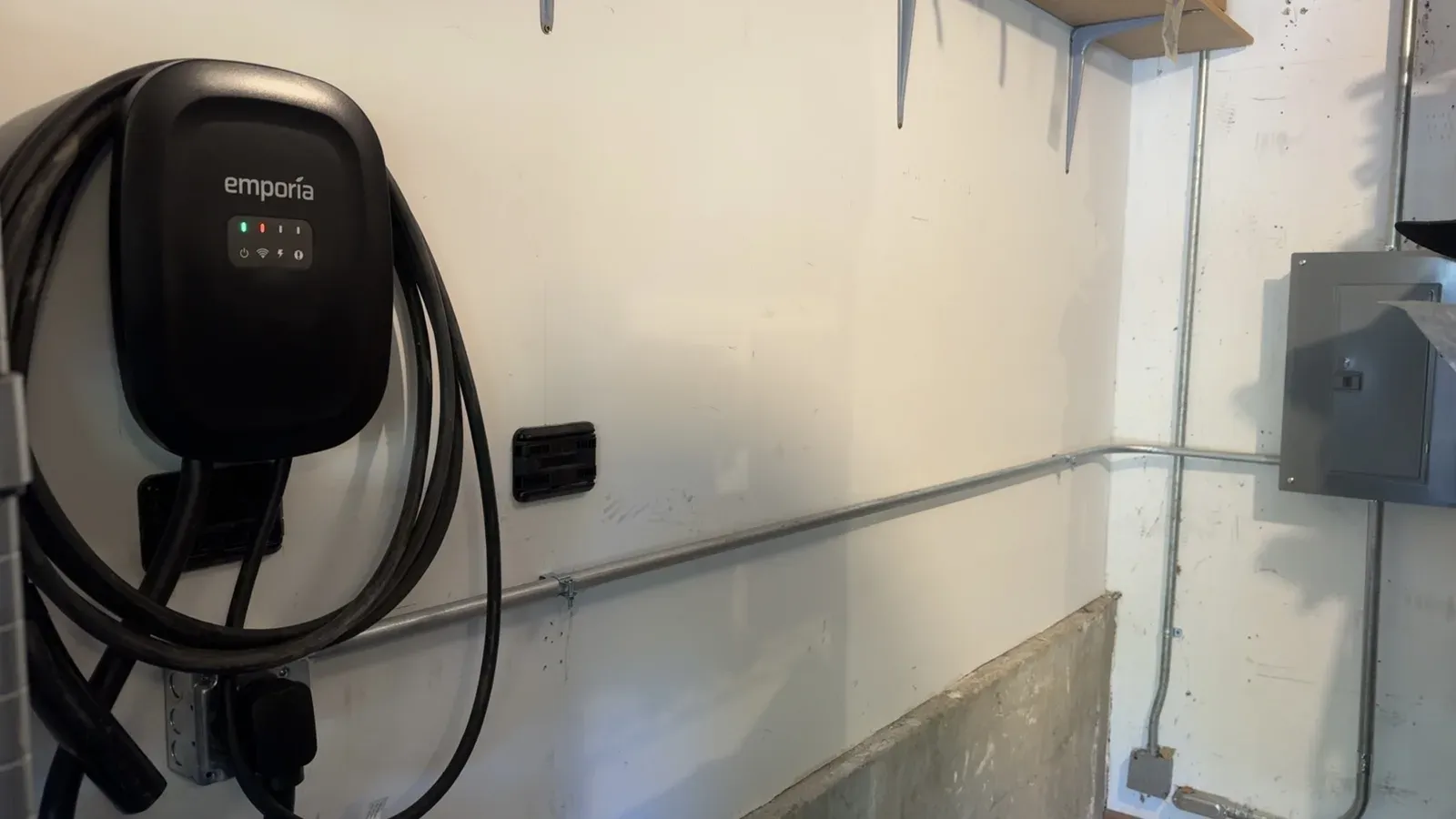
Emporia Level 2 EV charger installed by Cedarwell on a garage wall, with EMT conduit running along the wall to the electrical panel

Home EV Charging

EV Charger Installation in Denver, CO

The new EV is in the driveway and the cord that came with it adds a few miles of range an hour. We install Level 2 home chargers across Denver and the surrounding areas, sized to your panel by a real load calculation, permitted, inspected and finished so it looks like it came with the house.

  • Every charger brand installed
  • Load calculation before you buy
  • Permit and inspection handled
  • Xcel rebate paperwork supplied

Get Your Free Estimate

Tell us about the job. We’ll call to talk it through and set up a time.

Required. Prefer to talk? Call (720) 668-5051. See our Privacy Policy.

What We Handle

EV Charger Installation Services

  • Level 2 Home Charger Install

    A dedicated 240-volt circuit sized for 40, 48 or 60 amp chargers, hardwired or on a receptacle.

  • NEMA 14-50 Outlet Install

    A GFCI-protected 240-volt outlet for portable and mobile connectors, placed where your car actually parks.

  • Charger Plus Panel Upgrade

    A 200 amp service upgrade handled in the same project when your existing panel can't carry the charger.

  • Detached Garage and Driveway Runs

    Trenching, conduit and subpanels that bring power to a detached garage, carport or driveway spot.

  • Two-EV Power Sharing

    Two chargers set up to share one circuit and balance the load automatically, so two cars charge overnight.

  • Charger Repair and Relocation

    Replacing a failed unit, moving a charger during a remodel or correcting an install that keeps tripping.

Recent Work

Real jobs, not stock photos. Hardwired Level 2 chargers, Tesla Wall Connectors and NEMA 14-50 outlets for Rivian, Toyota and other portable connectors.

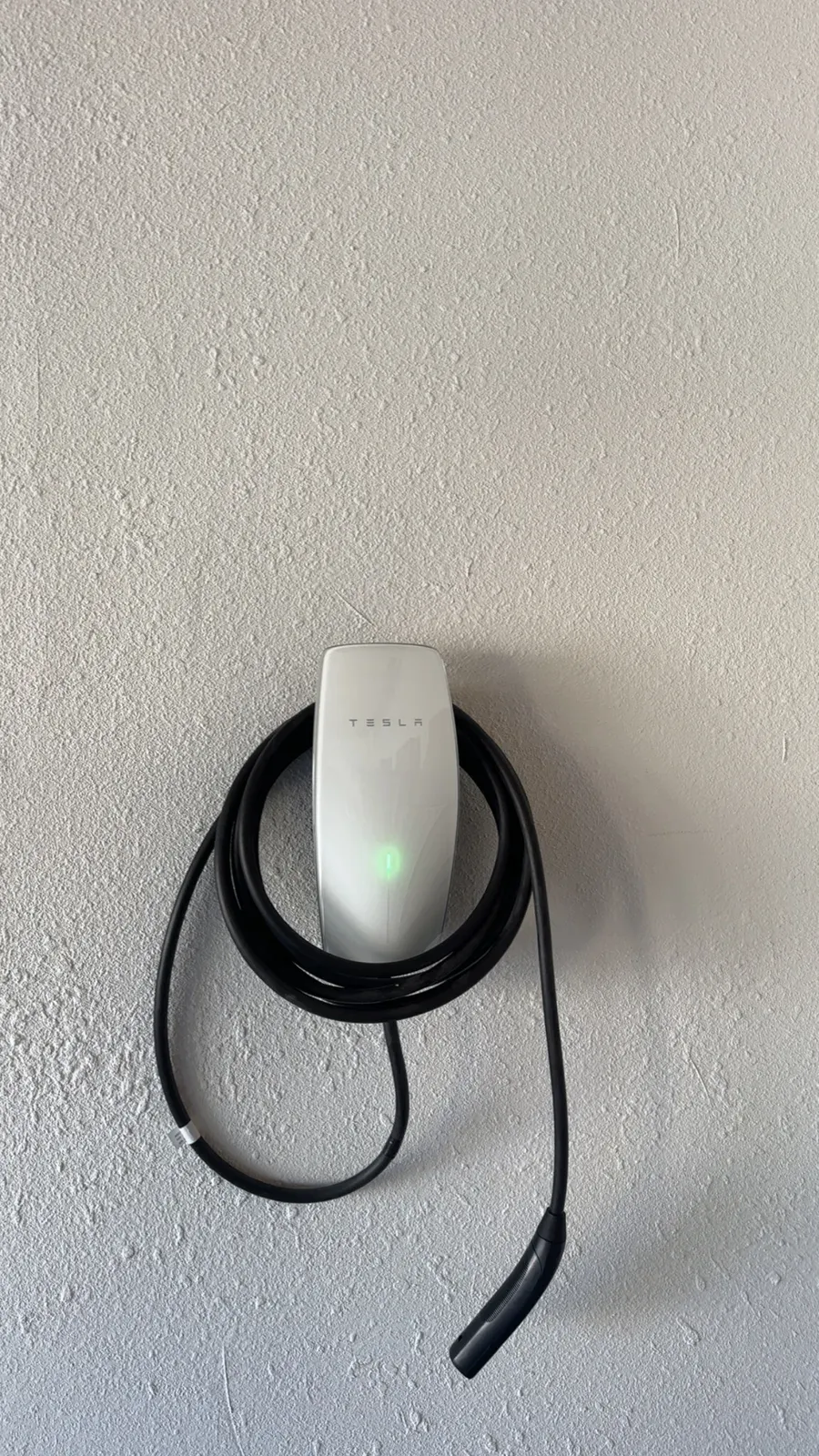
  • Tesla Wall Connector mounted on a textured garage wall with its charging cable coiled around the unit
    Tesla Wall Connector
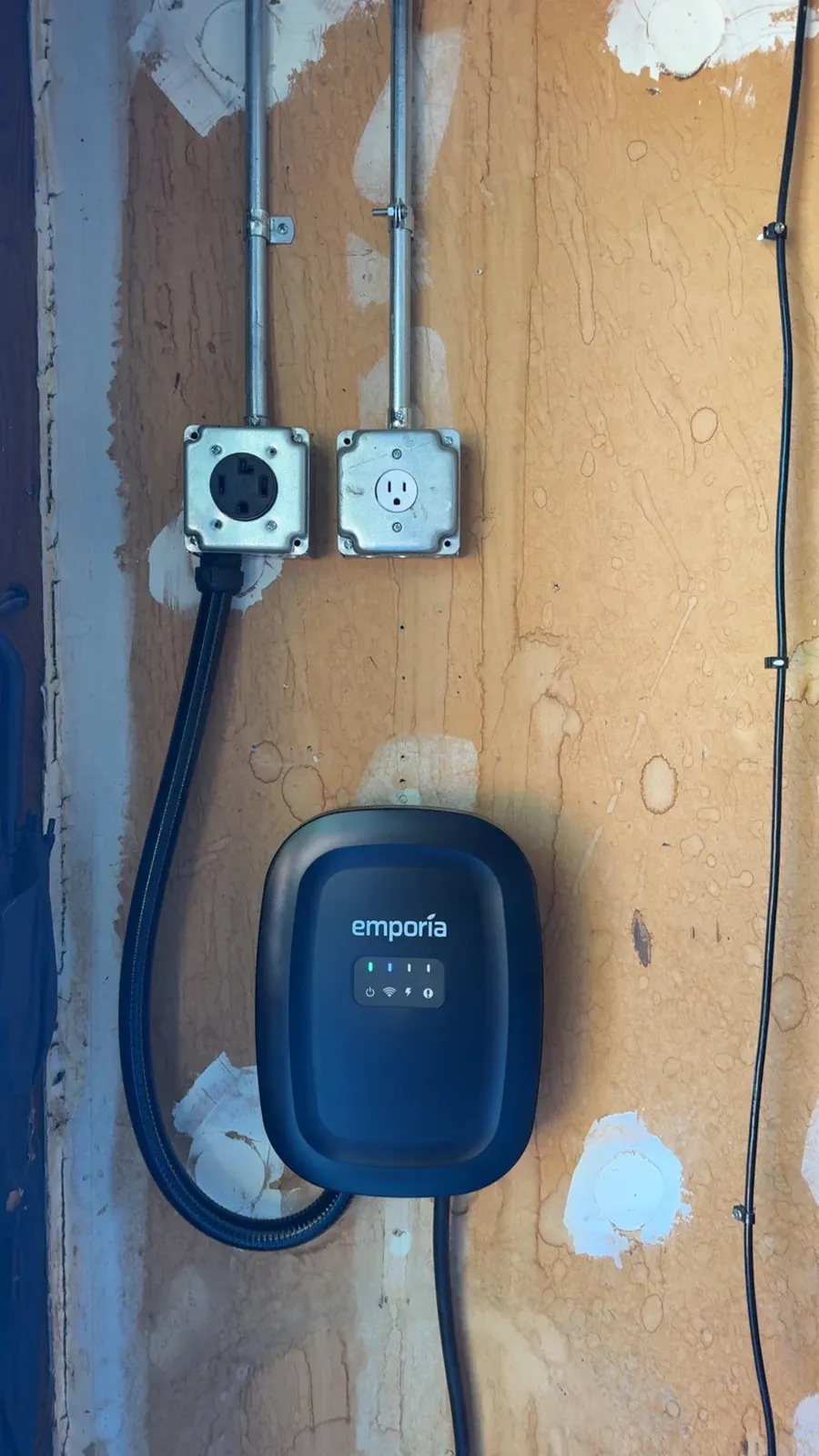
  • Emporia Level 2 charger below a NEMA 14-50 outlet and a 120-volt outlet in metal boxes fed by EMT conduit
    Emporia charger plus a 14-50 and a 120V outlet
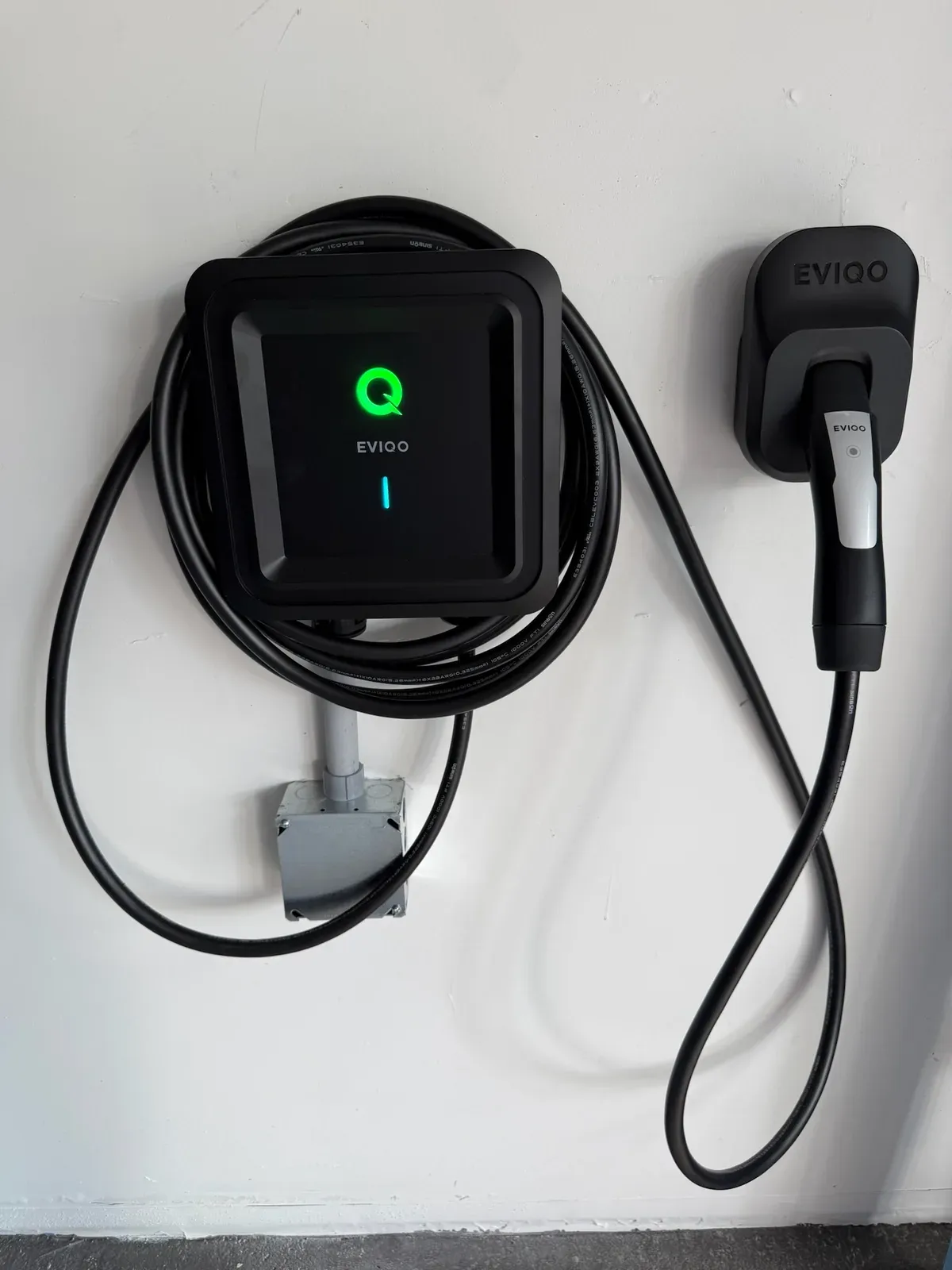
  • Hardwired Level 2 wall charger with the cable wrapped around it and a connector holster beside it
    Hardwired Level 2 charger with holster
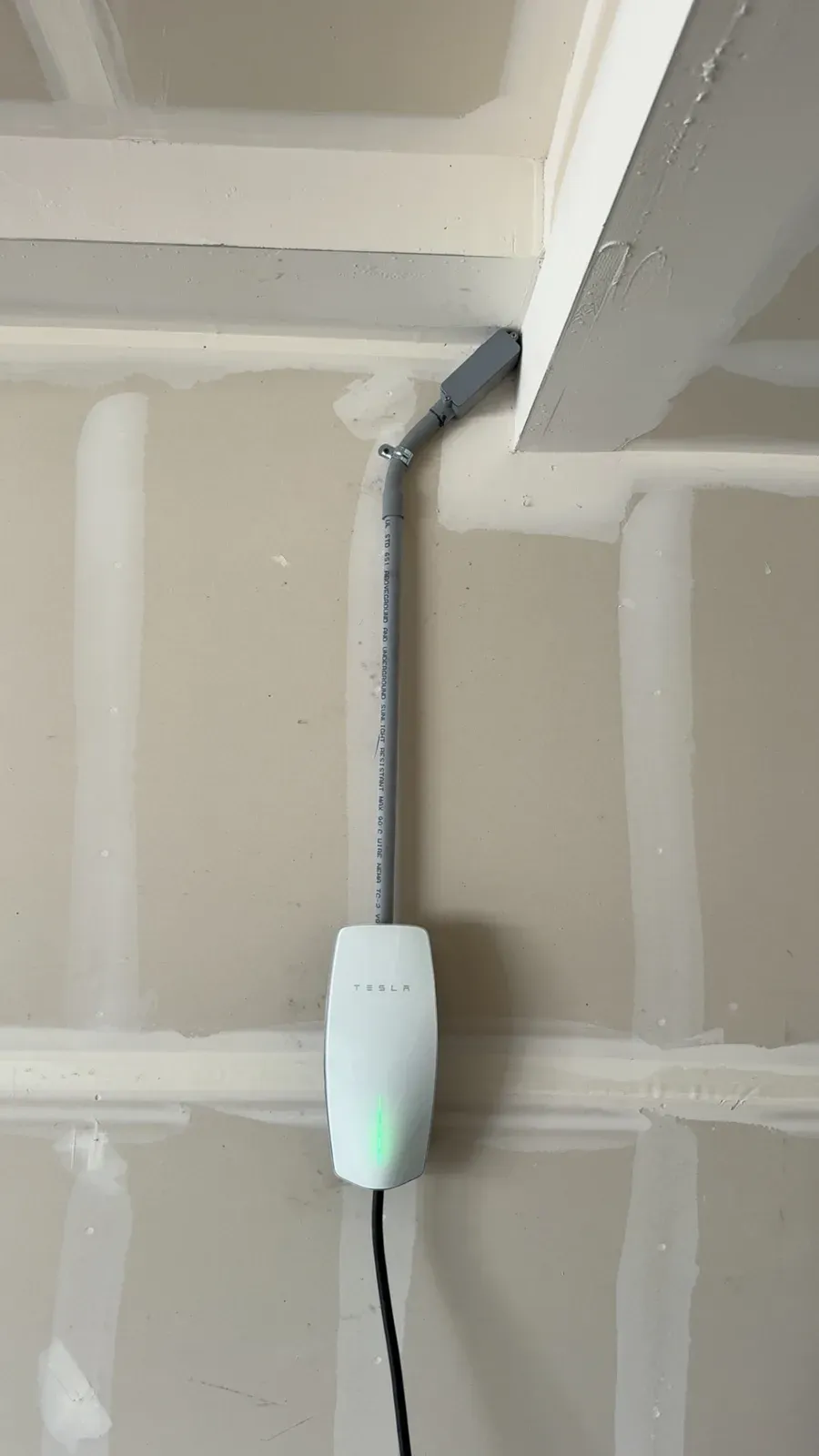
  • Tesla Wall Connector fed by a single conduit dropping from the garage ceiling
    Tesla Wall Connector, ceiling conduit drop
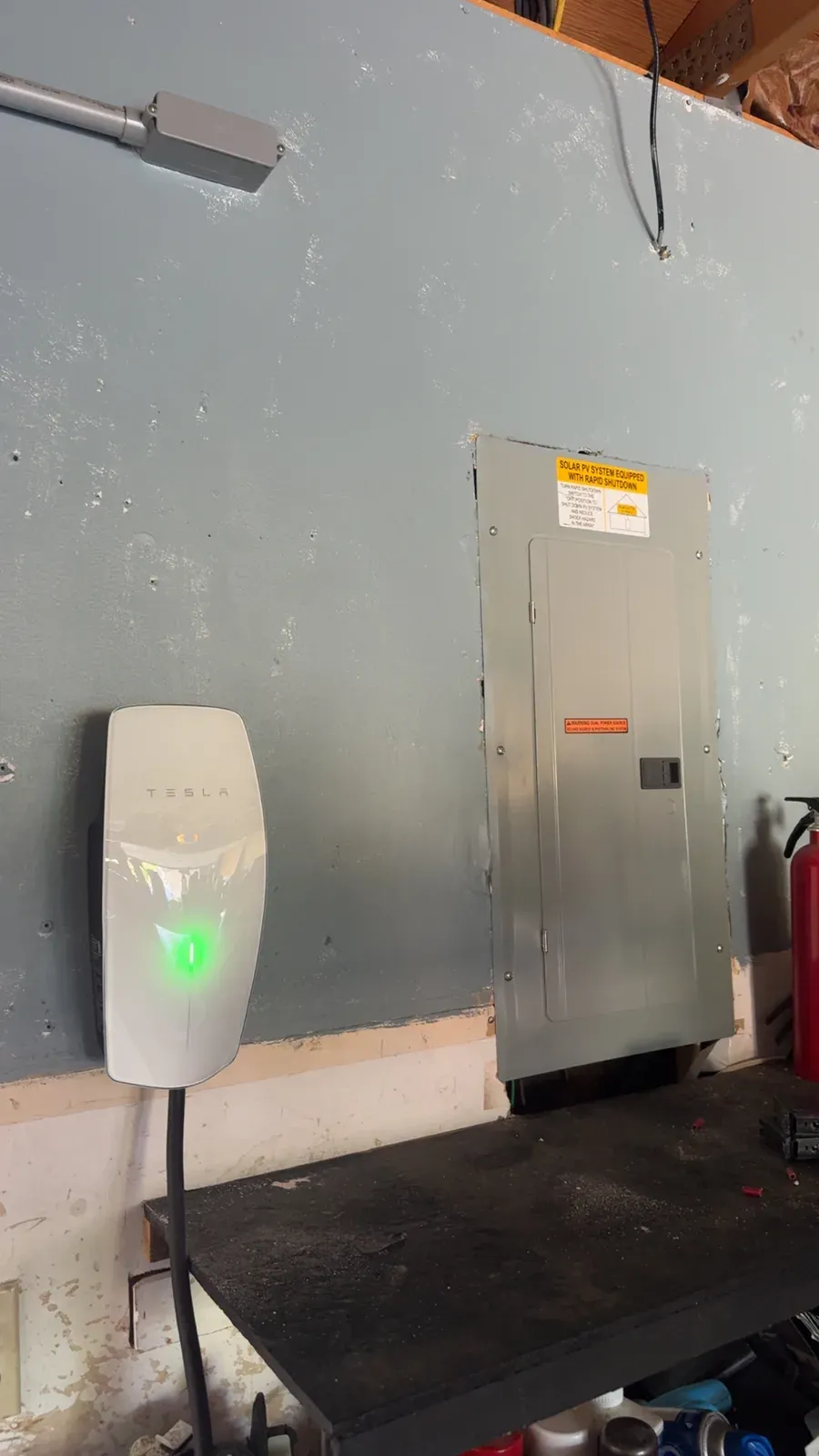
  • Tesla Wall Connector glowing green on a garage wall a few feet from the home electrical panel
    Tesla Wall Connector next to the panel
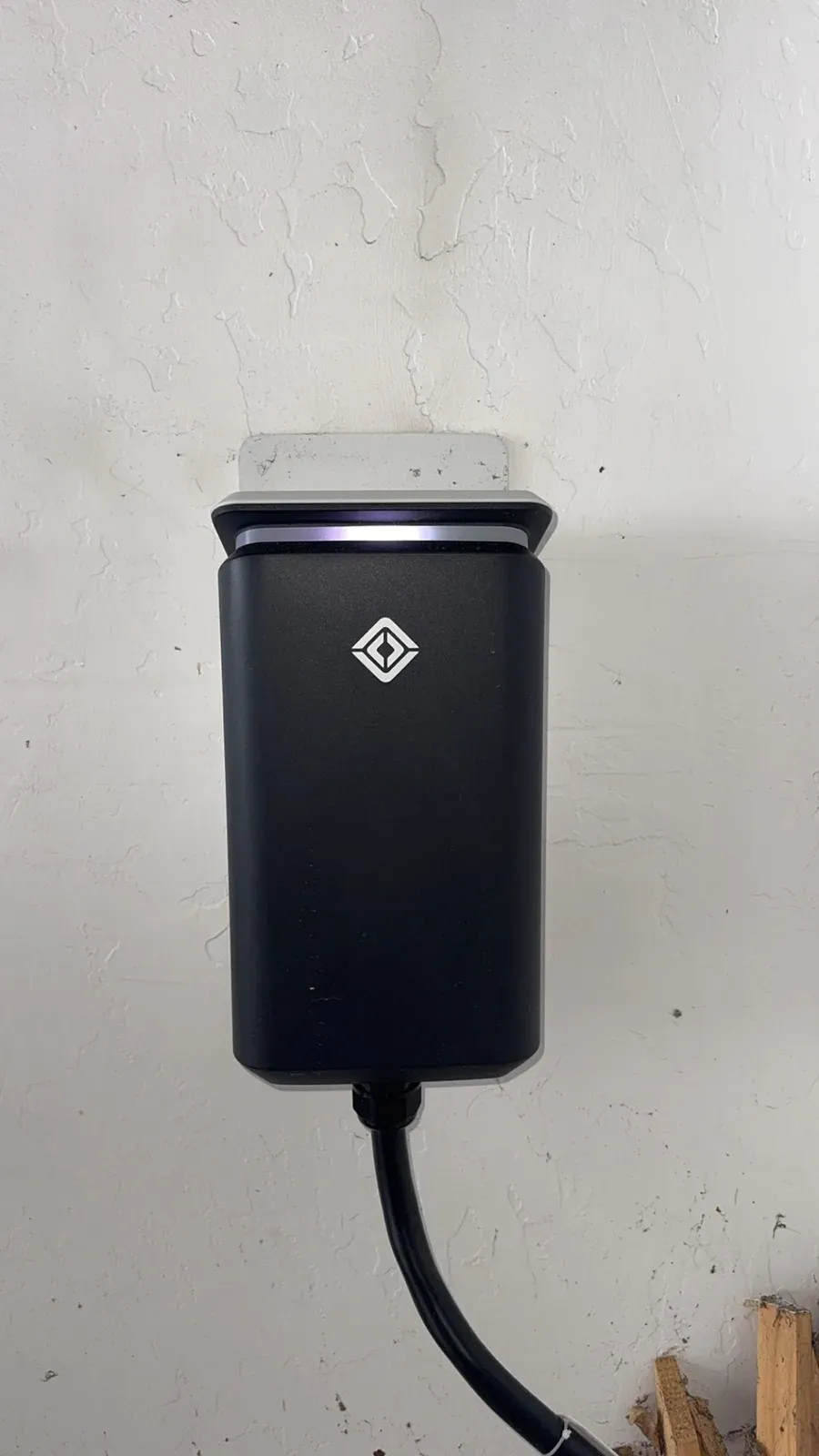
  • Black hardwired Level 2 EV charger mounted on a white garage wall
    Hardwired Level 2 charger
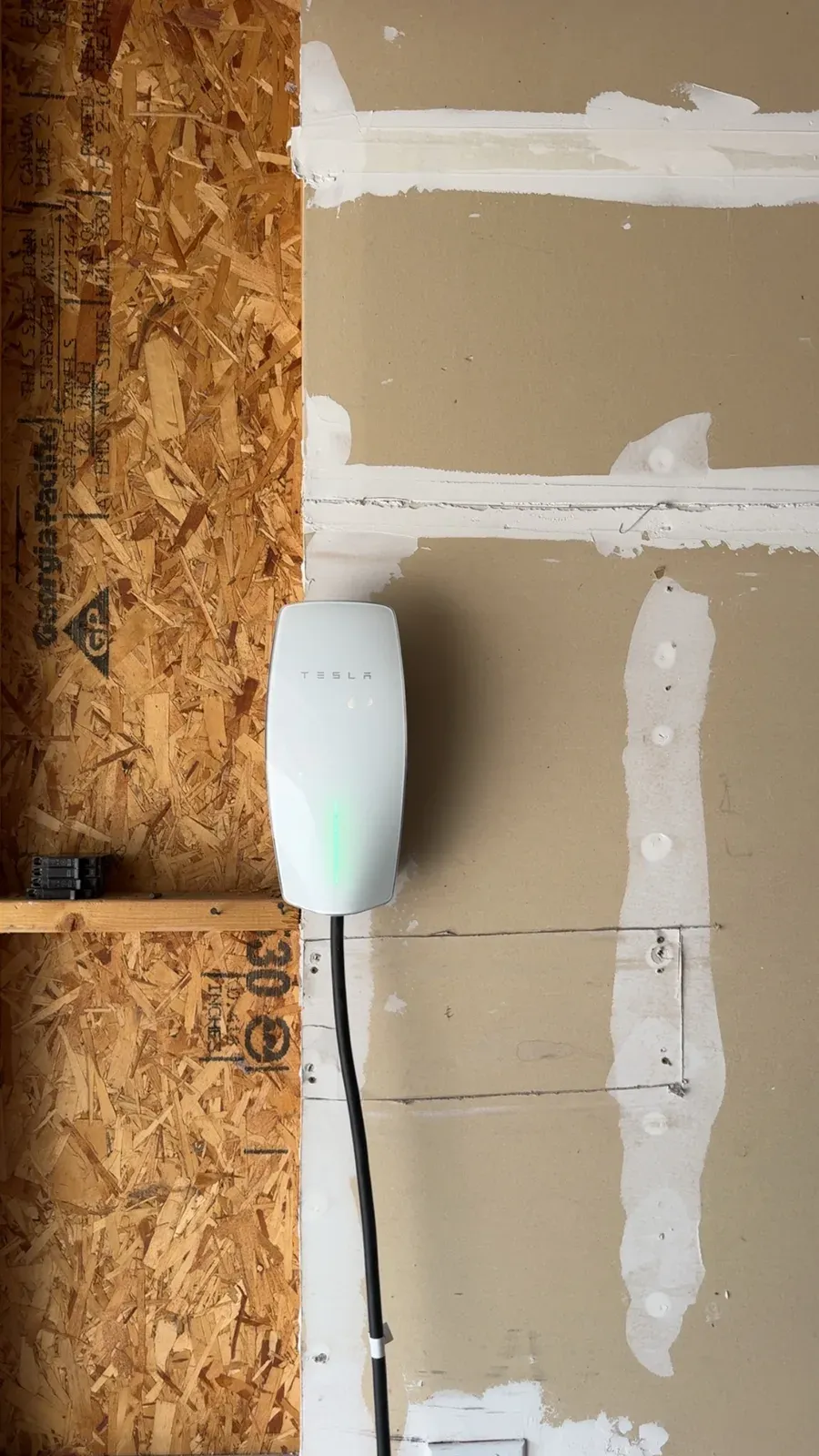
  • Tesla Wall Connector installed in an unfinished garage between OSB sheathing and taped drywall
    Tesla Wall Connector in an unfinished garage
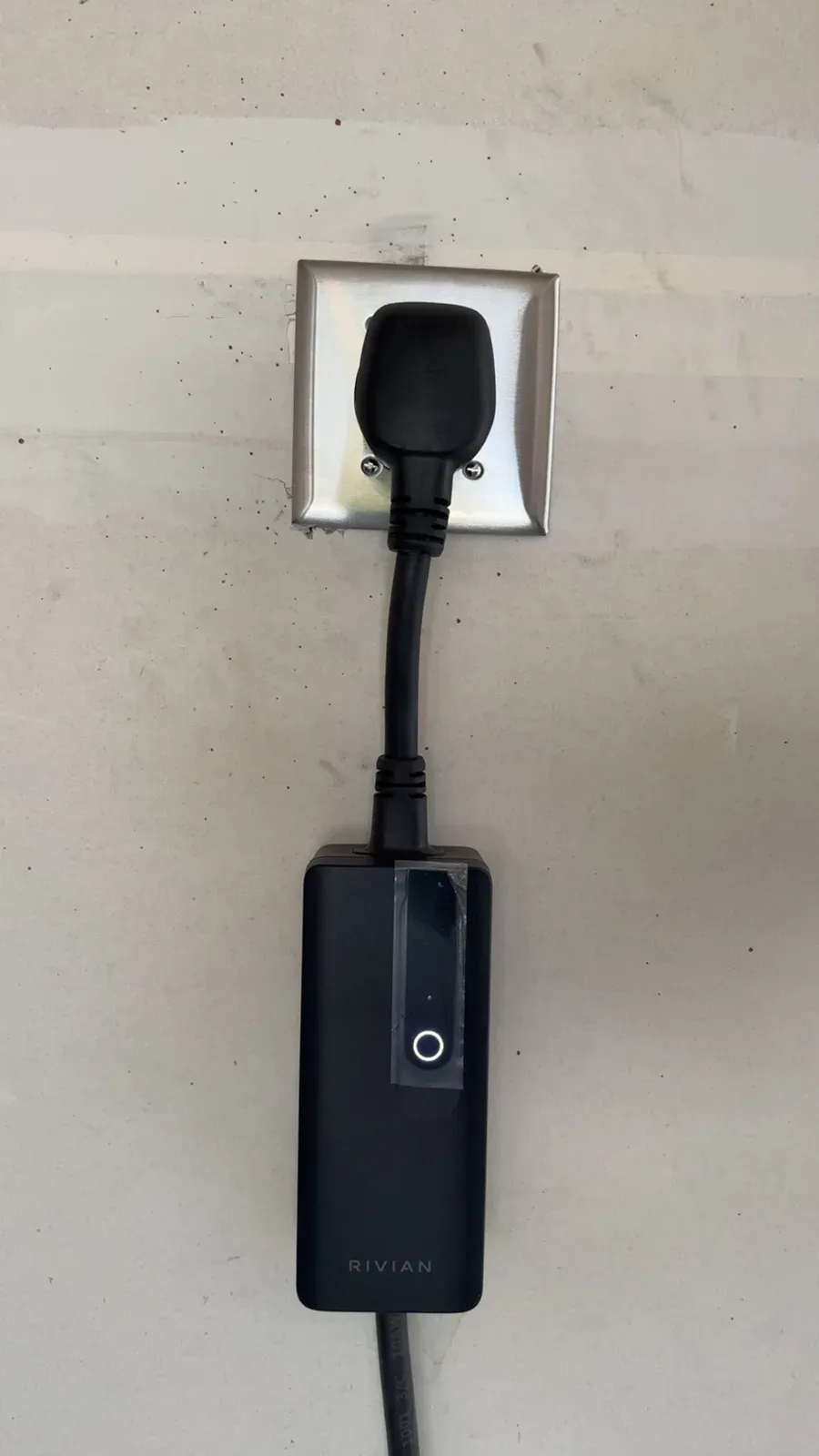
  • Rivian portable charger plugged into a NEMA 14-50 outlet with a stainless steel cover plate
    Rivian charger on a 14-50 outlet
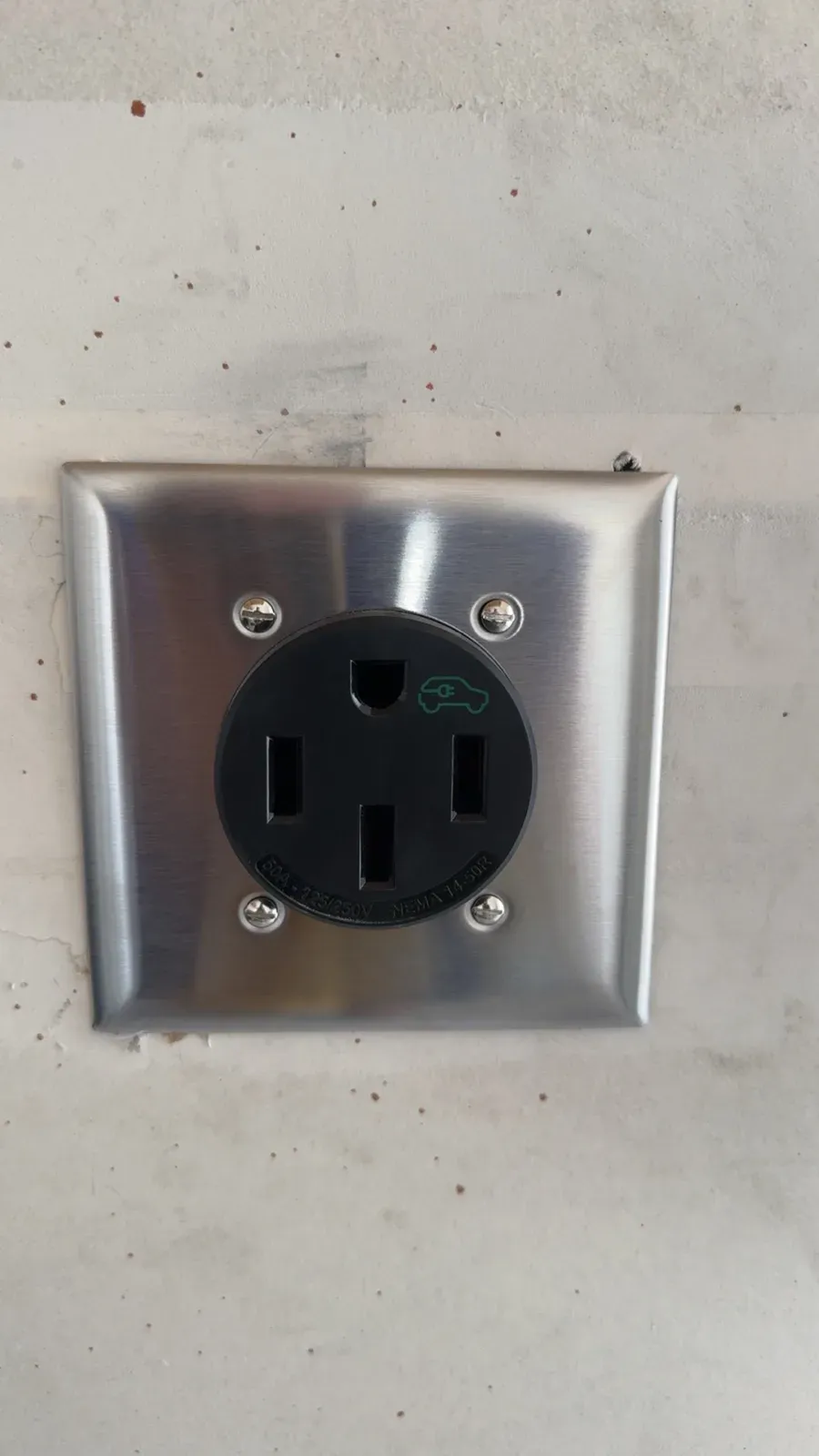
  • Close-up of a NEMA 14-50 EV outlet with a stainless steel wall plate
    NEMA 14-50 outlet, flush mount
  • Portable EV charger plugged into a NEMA 14-50 outlet fed by bent EMT conduit and a conduit body on a garage wall
    14-50 outlet with conduit feed
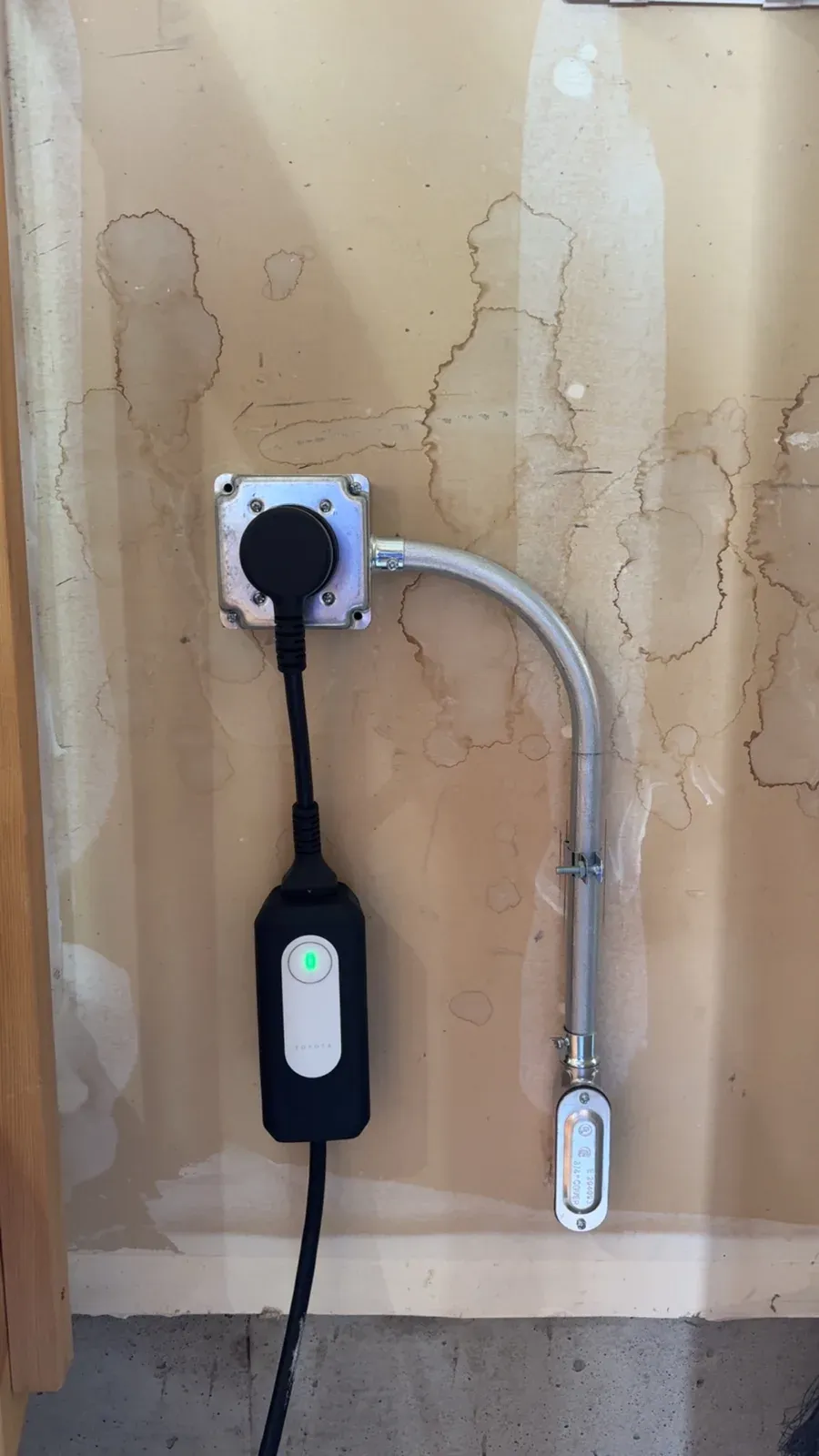
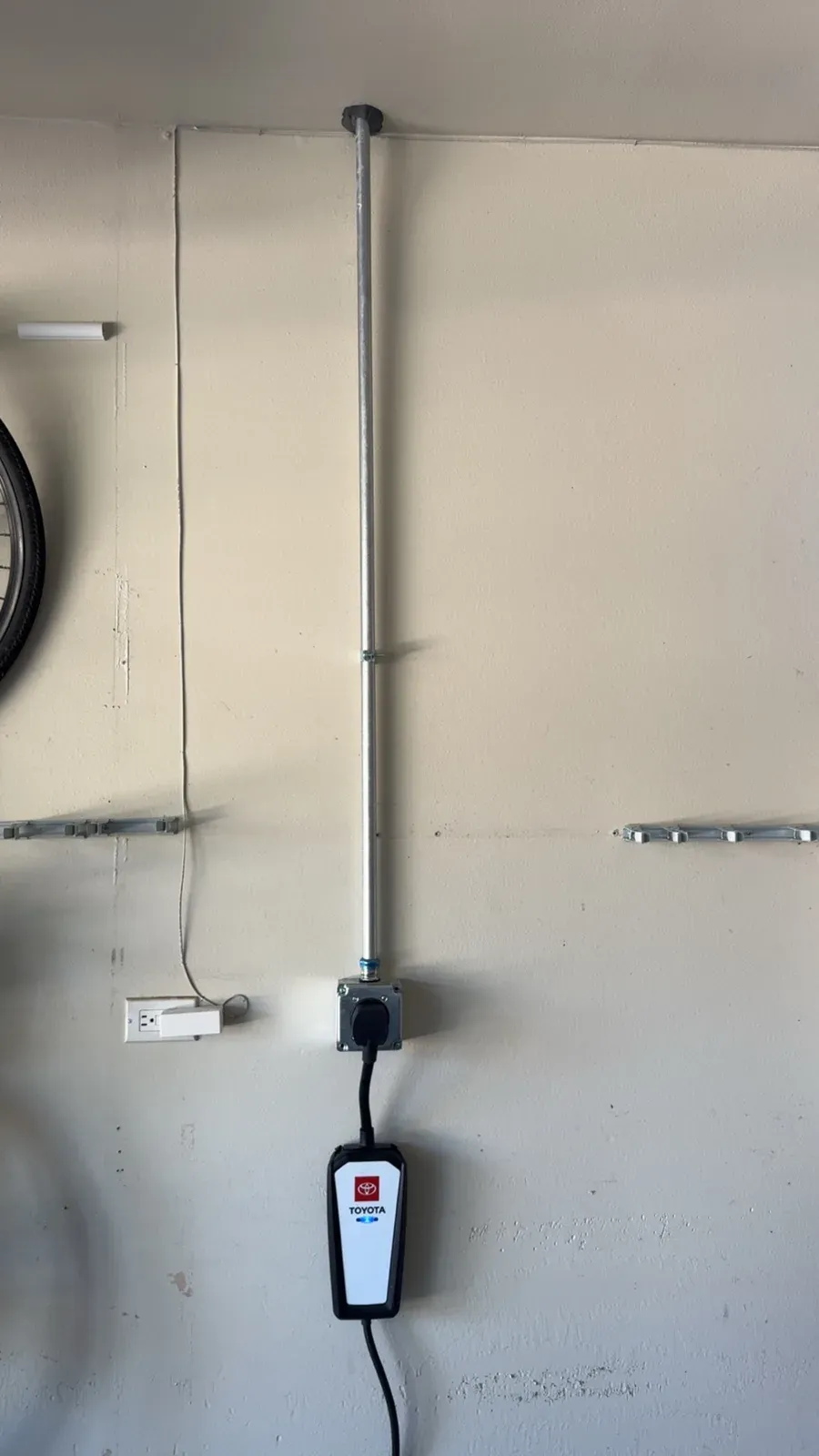
  • Toyota portable charger plugged into a 240-volt outlet fed by conduit running down from the garage ceiling
    Toyota charger on a new 240V outlet
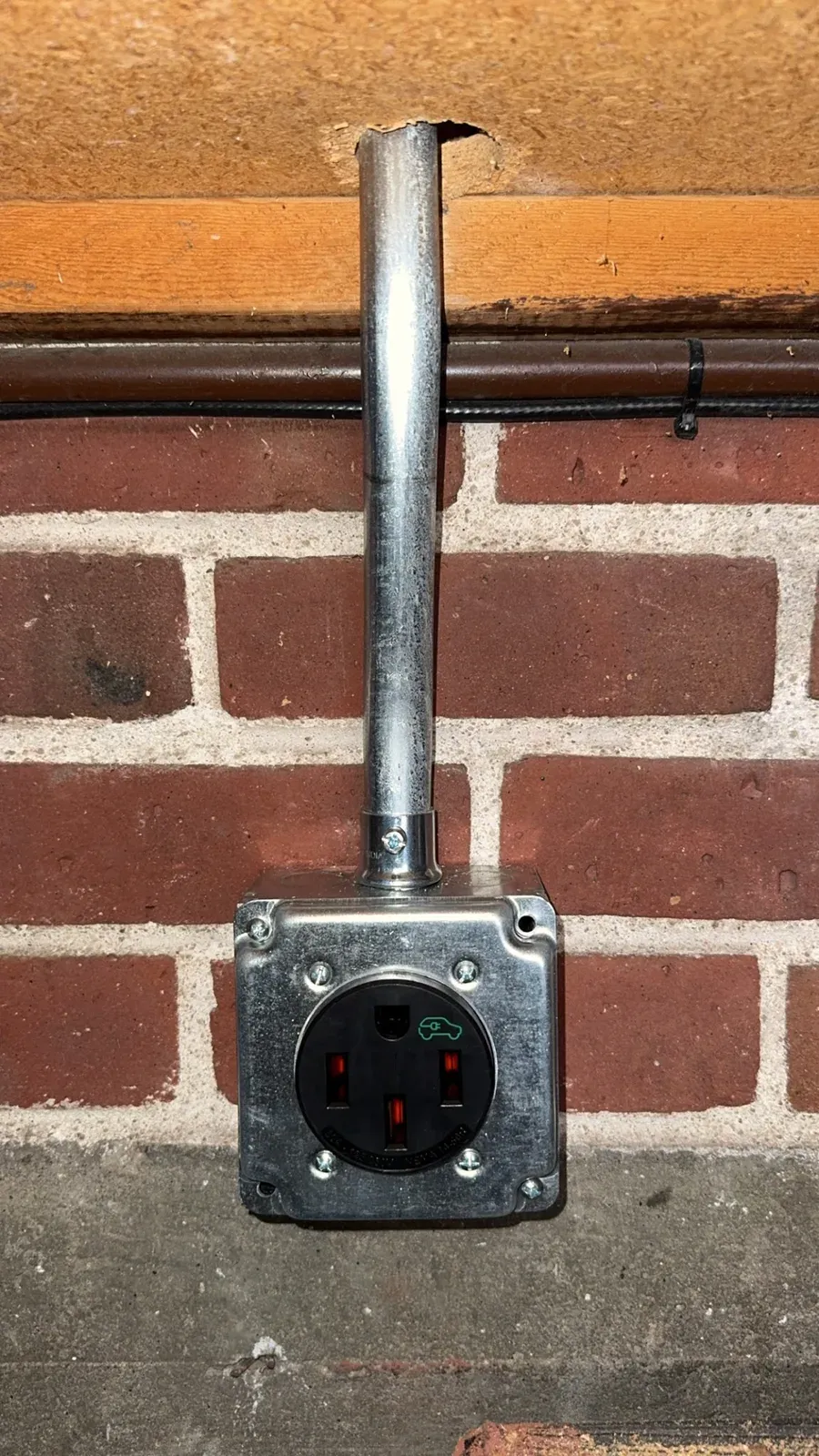
  • NEMA 14-50 outlet in a surface-mounted metal box on a brick wall with conduit dropping from the joists
    14-50 outlet on a brick wall

Why a Level 2 Home Charger Changes Everything

The cord that ships with most EVs plugs into a regular 120-volt outlet and adds roughly three to five miles of range per hour. That’s fine for a short errand, but it can’t keep up with a daily commute to the Tech Center plus a weekend trip up I-70.

A Level 2 charger runs on 240 volts, the same kind of circuit as an electric dryer. Depending on the charger and your car, it adds around 20 to 40 miles of range every hour, so the car is full by morning. Home charging is also usually far cheaper per mile than paying for DC fast charging on the road.

EV Charger Installation Starts With Your Panel

The most important part of any EV charger installation in Denver happens before a single wire is run. A charger is a continuous load, meaning it can pull full power for hours, so the circuit and breaker have to be sized with extra headroom. A 48 amp charger, for example, needs a 60 amp circuit.

That’s why we start with a load calculation on your home. It looks at your service size, your big appliances, your heating and cooling, and what you plan to add next. The answer tells us one of three things:

  • Your panel has room, and we install the charger at full speed.
  • Your panel is close, and a smaller charger setting or a load management device keeps everything safe.
  • Your panel is out of capacity, and an electrical panel upgrade makes sense before or alongside the charger.

You get that answer before you buy a charger, which saves a lot of guessing and returns.

Chargers We Install

We install every UL-listed Level 2 charger on the market, including Tesla, ChargePoint, Emporia, Grizzl-E, Wallbox and Autel. If you haven’t bought one yet, we’re happy to talk through what fits your car, your panel and where you park. Tesla owners can read more on our Tesla Wall Connector installation page.

A few things we look at when helping you choose:

  • Amperage. A higher-amp charger only helps if your car can accept that rate and your panel can supply it.
  • Hardwired or plug-in. Hardwired units charge faster and avoid GFCI nuisance trips. Plug-in units are easy to swap or take with you.
  • Indoor or outdoor. Driveway and carport chargers need an outdoor-rated enclosure that handles a Colorado winter.
  • Smart features. Wi-Fi scheduling lets you charge during cheaper overnight hours if your utility plan rewards it.

What to Expect on Installation Day

We protect your floors, mount the charger where the cable reaches your charge port comfortably, and run the circuit as neatly as the space allows. In an open garage that means straight, level conduit. In a finished space we fish wire through walls where we can and tell you ahead of time if any drywall needs to be opened.

Before we leave, we power up the charger, confirm it’s charging at the rate you expect, set up the app if it has one, and label the new breaker in your panel. You also get photos of the finished work.

Permits, Inspection and Rebate Paperwork

Every new 240-volt charger circuit gets a permit. We pull it with Denver or whichever city or county covers your address, schedule the inspection and attend it. Permitted work protects you with your insurance company and becomes a selling point when you list the house.

Utility rebates and incentives for home charging change from year to year. When a program is available, it usually asks for an itemized invoice and the installing contractor’s details. We supply exactly what Xcel Energy asks for, so the paperwork side is easy for you.

What Affects the Price of an EV Charger Installation

We give every customer a written flat-rate price before the work starts. The main things that move that price are:

  • The distance from your panel to your parking spot
  • Whether the wire runs through an open garage, finished walls or underground
  • The charger’s amperage and whether it’s hardwired or plug-in
  • Whether your panel has space and capacity for a new 240-volt circuit
  • Whether a panel upgrade or load management device is needed

EV Charging for Two Cars, Rentals and Businesses

Two-EV households don’t always need two full circuits. Many chargers can share one circuit and balance power between cars automatically, which avoids a bigger panel upgrade. For apartment buildings, HOAs, offices and retail sites, see our commercial EV charging station installation service.

Home EV Charger Installation Across the Denver Metro

We install home chargers throughout Denver and the nearby suburbs, including Aurora, Highlands Ranch, Parker, Castle Rock, Centennial and Littleton. If you’re not sure whether we cover your area, give us a call or request a free estimate and we’ll let you know.

Our Process

How Your EV Charger Installation Project Runs

Five steps from your first call to a passed inspection, so you always know what happens next.

  1. Tell Us What Is Going On

    Call or send the form. We ask the right questions up front so we show up with the right parts.

  2. On-Site Assessment

    A licensed electrician looks at your panel, the load and the access, then walks you through the options.

  3. Written Flat-Rate Quote

    You get an itemized price in writing with permit, materials and labor included, before any work starts.

  4. Clean, Permitted Install

    Floors protected, wiring neat, the panel labeled and the debris hauled away when we finish.

  5. Inspection and Walkthrough

    We meet the inspector, hand you the paperwork and photos, and show you how everything works.

  • “Jordan did a really good job on Installed EV charger at my home. He install the electrical wiring from the beggining to the end with out turn off the breaker. He works neatly and tidily. He also cover up the wired fron the breaker to the outlet. He cleaned all after done installed. he works very professionally.”

    Kathy NguyenGoogle review
  • “Jordan did a great job installing my EV charger. His communication throughout the process was excellent, and he was professional, knowledgeable, and easy to work with. He completed the installation in a timely manner and at a great price.”

    Danny NolanGoogle review
  • “I had a fantastic experience with Cedar Well Electric! They installed my EV charger and did an excellent job. The team was professional, knowledgeable, and took care with the installation. Everything works great, and I’m so happy with the result. I highly recommend them to anyone who needs an EV charger installed!”

    Maria JGoogle review

Questions

EV Charger Installation FAQs

How Much Does EV Charger Installation Cost in Denver?

The price depends on the distance from your panel to where you park, whether the wire runs through finished walls or an open garage, the charger's amperage and whether your panel has room for a new 240-volt circuit. After a quick look at your panel we give you a written flat-rate price before any work starts.

Do I Need a Panel Upgrade for an EV Charger?

Not always. Many Denver homes with 200 amp service can add a Level 2 charger with no upgrade. Older 100 amp homes sometimes can too, with a smaller charger or a load management device. We run a load calculation on your home first, so you know before you buy anything whether an upgrade is needed.

Is a Permit Required to Install an EV Charger in Denver?

Yes. A new 240-volt circuit for a charger needs an electrical permit in Denver and in the surrounding cities and counties. We pull the permit with whichever jurisdiction covers your address, schedule the inspection and give you the paperwork, which utility rebate programs and future buyers both ask for.

How Long Does a Home EV Charger Installation Take?

Most garage installs near the panel take a few hours on a single visit. Longer runs through finished walls, detached garages that need trenching, or jobs that include a panel upgrade take longer and may need the utility to disconnect and reconnect power. We give you the timeline with your written quote.

Should I Hardwire My Charger or Use a NEMA 14-50 Outlet?

Hardwiring allows higher charging speeds and avoids the nuisance tripping some chargers have on the GFCI protection that garage outlets now require. An outlet makes sense if you use a portable connector or may take the charger with you. We walk through the tradeoff for your car and charger before we quote.

Talk to a Licensed Denver Electrician

Free estimates on installs and upgrades, a written price before any work starts, and permits handled for you.