
Hot Tub Electrical Installation Starts Before Delivery
A hot tub is heavy, wet and plugged into a circuit that can hurt someone if it is wrong. That is why the National Electrical Code gives pools, spas and hot tubs their own chapter, Article 680. Our hot tub electrical installation in Denver follows it from the panel to the tub.
We like to hear from you before the tub is ordered, or at least before the delivery date is set. The right circuit depends on the model, and the wiring should be finished when the dealer’s crew sets the tub down.
What a Hot Tub Circuit Includes
Most full-size tubs run on a dedicated 240-volt circuit, commonly 50 or 60 amps. The pieces that go with it are:
- A breaker in your panel sized to the tub’s nameplate
- Wire and conduit from the panel to the tub location
- A GFCI spa disconnect within sight of the tub
- Bonding of the metal parts around the tub
- A permit and an inspection
The GFCI disconnect does two jobs. It shuts the tub off in an emergency, and it cuts power in a fraction of a second if current ever leaks toward the water.
Hot Tub Wiring, Trenching and Burial Depth
Plenty of backyards put the tub a long way from the panel, which means underground wiring. Conduit gets trenched across the yard, and how deep it goes depends on the type of conduit and what is above it, such as lawn, patio or driveway.
We map the route with you first, call for the utility locate before we dig, and think about sprinkler lines and tree roots. After the trench is filled we restore the area as closely as we can. When the tub sits on a deck or a patio against the house, the run is often shorter and stays out of the ground.
Equipotential Bonding Around the Tub
Bonding is the step homeowners rarely see and inspectors always check. Metal parts near the water, such as the tub’s frame, pump motors and nearby metal, are tied together so they stay at the same electrical potential. A stray voltage then has nowhere to hurt you.
We do this during the install, before the tub is set. It is much harder to add afterward, which is one more reason to call early.
120V Plug-and-Play Tubs
Some smaller tubs plug into a standard-looking outlet. These need their own dedicated GFCI-protected circuit, and the outlet has to sit at the distance and height code allows from the tub. They heat slowly and run the pump and heater less at once, so they are a fit for some homes and not for others.
If you already own one and it trips a breaker, we can find out whether the circuit is shared with something else. Our outlet and GFCI installation service covers the protection side.
Sauna Wiring, Swim Spas and Cold Plunges
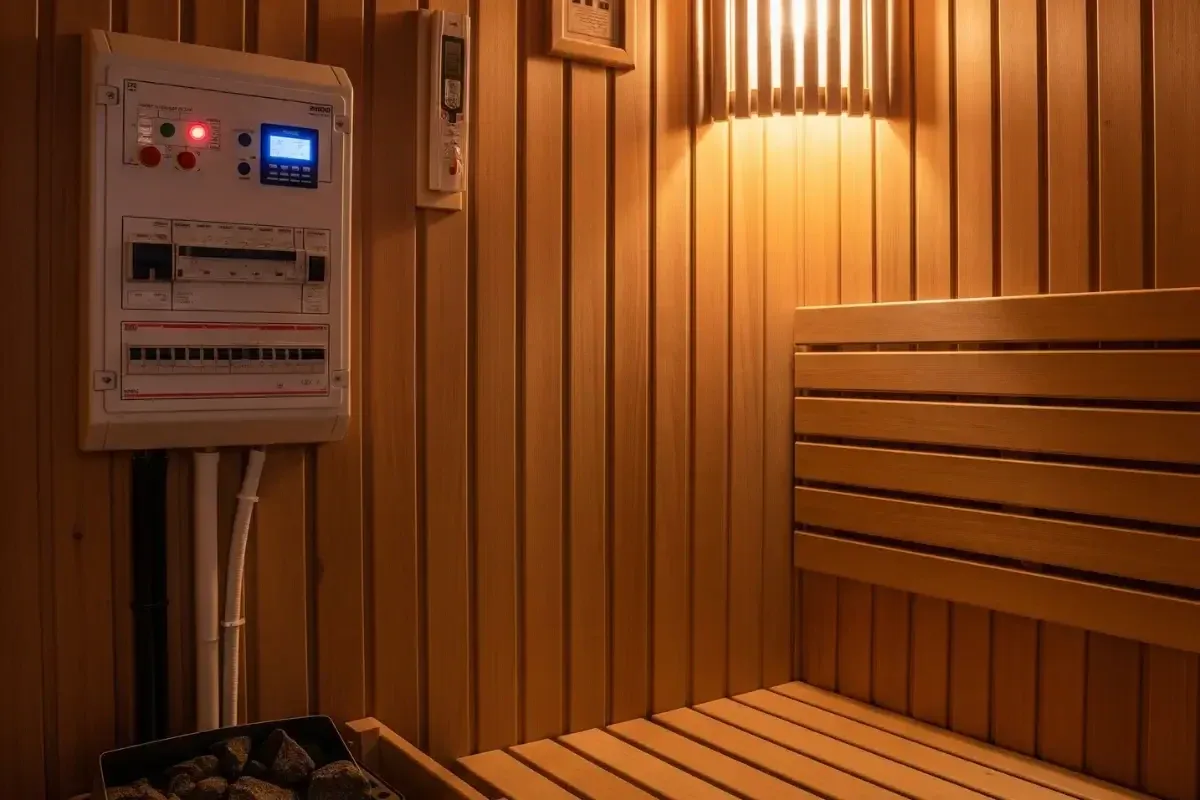
Saunas are a separate job from hot tubs. The heater circuit is sized to the heater’s nameplate, usually 240 volts, and the controls and any lighting inside have to be rated for the heat. Indoor saunas are often wired during a basement or garage remodel, and outdoor barrel saunas need a run like a hot tub’s.
Swim spas draw more power than most hot tubs. Cold plunges bring chillers and pumps, and steam rooms bring a steam generator. Each one gets a dedicated circuit and the GFCI protection that matches the equipment.
Will Your Panel Handle It?
A 50 or 60 amp circuit is a big addition to a panel that is already busy with a dryer, an oven, air conditioning and maybe an EV charger. Before we quote, we look at your panel and run a load calculation so we know whether there is room.
If there is not, we can add an electrical panel upgrade in the same project. You hear that before any work starts, not halfway through.
Working With Your Spa or Sauna Dealer
Dealers usually need the power ready by the delivery date, and they will not hook the tub to a circuit that is not inspected. We coordinate with them directly. Give us the model and delivery date, and we schedule the trenching, the permit and the inspection to land ahead of it.
Denver weather is part of that schedule. A spring snowstorm or a hard freeze can push a trench day, so we build in room when we can.
What Affects the Price
Every customer gets a written flat-rate price before the work starts. The main things that move it are:
- The distance from your panel to the tub or sauna
- Whether the run is trenched, inside walls or exposed
- The tub’s amperage and whether it is hardwired or plug-in
- Whether your panel needs more capacity
- Any concrete, deck or landscaping that has to be worked around
Hot Tub and Sauna Wiring Across the Denver Metro
We wire spas and saunas in Denver and the surrounding suburbs, including Aurora, Highlands Ranch and Parker. Not sure we cover your address? Give us a call or request a free estimate and we will let you know.