
Why Working Smoke Alarms Matter
Most people replace a smoke alarm only when it starts chirping, and a chirp is a sign the alarm is asking for attention. A smoke alarm is one of the few items in your home that you hope never gets used. When it does, the minutes it gives you to get everyone outside are what count.
Alarms wear out, batteries get pulled during a false alarm and never go back in, and older homes often have too few. A fresh set of smoke alarms, placed correctly, is one of the most direct safety upgrades an electrician can make.
Smoke Detector Installation in Denver, Start to Finish
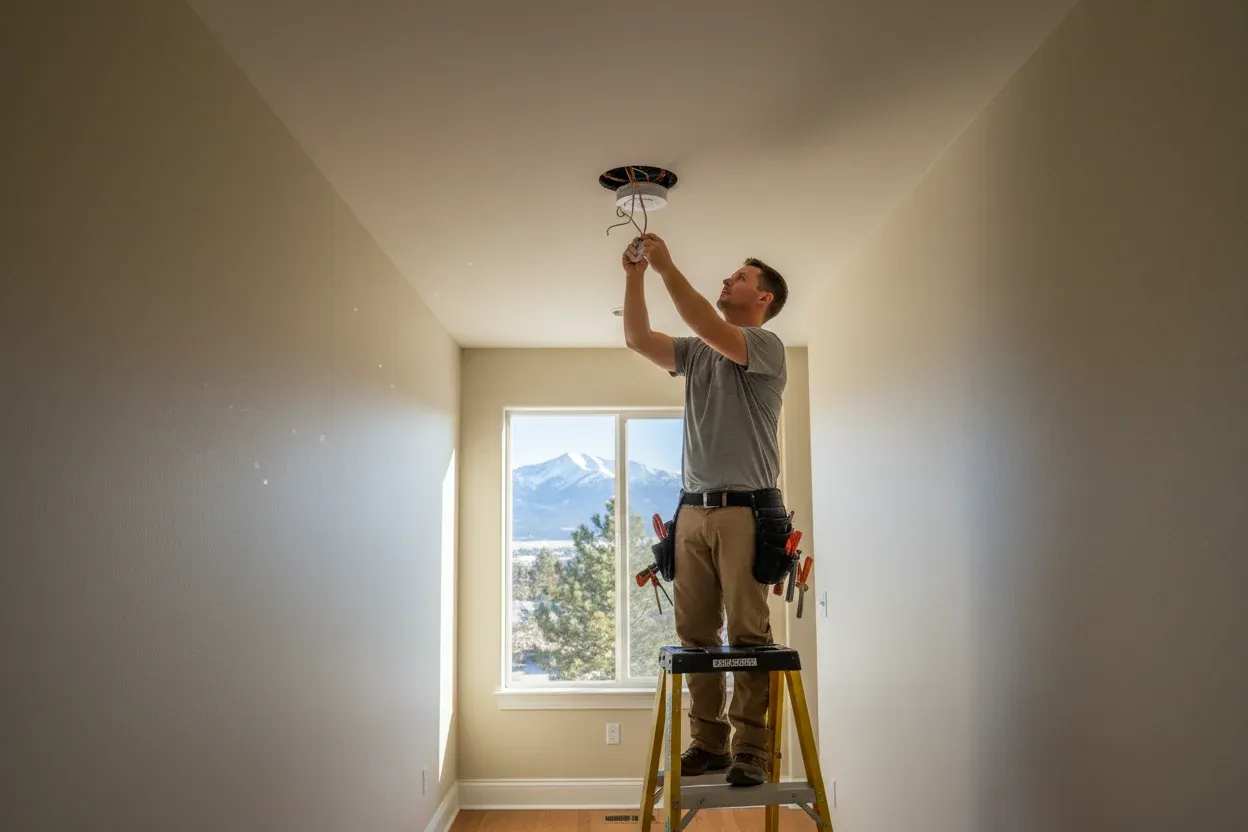
We walk through your home, note what alarms you have and check their dates. Then we map where alarms should go, choose matching units and install them. A step ladder, a meter and a tidy hand with the drywall are usually all it takes.
You get a written flat-rate price before we start. We test every alarm when we finish, show you how the test button and silence feature work and leave your ceilings clean.
Hardwired Interconnected Smoke Alarms
Hardwired smoke alarms connect to your home’s electrical system and carry a battery backup, so they keep working if the power goes out. They are not dependent on a battery someone remembers to change once a year.
Interconnection is the big benefit. When one alarm senses smoke, all of them sound. If a fire starts in the basement while you sleep upstairs, you hear it at the same moment the basement alarm does. In a finished house, we can often add hardwired alarms by fishing wire with little drywall damage.
Carbon Monoxide Detectors and Combination Alarms
Carbon monoxide is a gas you cannot see or smell, produced by fuel-burning appliances such as gas furnaces, water heaters, fireplaces and vehicles in an attached garage. A CO alarm is the only way to know it is building up.
Colorado requires CO alarms near sleeping areas in homes with fuel-burning appliances or an attached garage. We install stand-alone detectors or combination smoke and CO alarms, depending on where they fit. Combination units are useful where you want fewer devices on the ceiling.
Where Smoke Alarms and CO Alarms Belong
Placement matters as much as the alarm itself. The general guidance we follow is:
- Inside every bedroom
- Outside each sleeping area, such as a hallway
- On every level, including the basement
- Away from kitchens and bathrooms, where cooking and steam cause false alarms
- CO alarms near sleeping areas, following the manufacturer’s directions
Some homes were built with only a hallway alarm and a bedroom or two left unprotected. We can fill those gaps and tie everything into a single interconnected system.
Replacing Old Smoke Alarms
Manufacturers generally recommend replacing smoke alarms about every 10 years. Look at the back of the alarm for the date. If it is older than a decade, or the date is missing, it is time.
Mixed brands are another problem, since alarms from different makers often cannot interconnect. We replace the set with matching units, so they sound together. We also check whether an old wired-in alarm uses a connector that fits the new model, which keeps the job simple. If an outlet or wiring problem turns up along the way, we can handle electrical repairs in the same visit.
Smoke Alarms During Remodels and Additions
A basement finish, a new bedroom or an addition changes where alarms should go. A converted room that now works as a bedroom needs its own alarm inside it, and a finished basement needs coverage on that level.
We coordinate alarm locations with the rest of the wiring during residential electrician work, so the smoke alarm circuit goes in before the walls close up instead of after.
Permits and Inspections
A like-for-like swap is typically straightforward, but new hardwired alarm circuits can need a permit, depending on where you live. We check what your jurisdiction requires, pull the permit when needed and schedule the inspection.
All of our work comes with a one-year workmanship warranty in writing, and the electrician who quotes your job is on the crew that installs it.
What Affects the Price of Smoke Detector Installation
We quote a flat rate in writing, and the main factors are:
- The number of alarms and whether they are hardwired or battery-only
- How easy it is to reach the ceiling and run wire
- Whether the new alarms replace existing wired ones or need new wiring
- Stand-alone CO alarms versus combination units
- Remodel work happening at the same time
Smoke and CO Alarm Installation Across Denver and Surrounding Areas
We install alarms throughout Denver and its suburbs, including Aurora, Parker, Littleton and Centennial. Alarms are a quick job we can often pair with other electrical work. To get started, request a free estimate.