Three Safe Ways to Power a Colorado Home
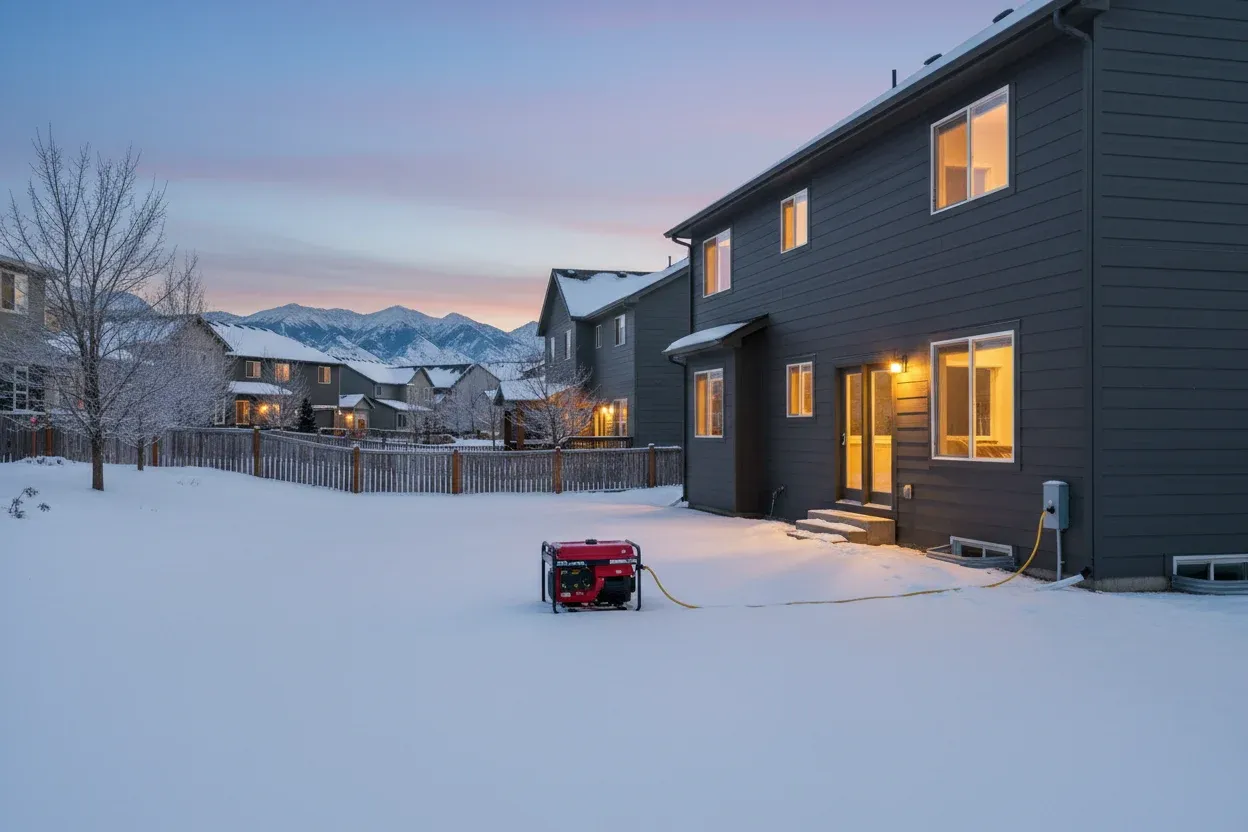
The wet spring snow is bending the pine boughs, the lights flicker, and then the whole street goes dark. Denver outages are usually short, but wind, hail and heavy snow can leave a neighborhood without power for long enough that the freezer, the furnace fan and the sump pump all become real worries.
A generator can cover them, and there are three safe ways to connect one. They differ in cost, convenience and how much of your home they power. This guide compares them so you can choose with confidence.
Why Backfeed Makes Every Shortcut Dangerous
When a generator is wired to a house wrong, its power can travel backward through your electrical service and out onto the utility lines. That is backfeed. A transformer on the pole can step the voltage up, turning a wire utility crews believe is dead into a lethal one.
Line workers restoring power and neighbors near a downed wire are the ones at risk. That is why all three options below include a way to keep your house electrically separate from the grid. The safe methods are not optional upgrades. They are the whole point.
Why Suicide Cords Are Never Okay
A suicide cord has a plug on both ends. One end goes into the generator, and the other goes into a wall outlet or dryer receptacle. It looks like a clever shortcut, but it puts live voltage on exposed prongs and sends power straight back onto the grid.
There is no safe way to use one, and there is no version of it we would ever hook up. If you already have one, stop using it. A proper inlet box and interlock cost a fraction of the harm a single mistake can cause.
Option One: Interlock Kit and Inlet Box
An interlock kit is a small mechanical plate that fits on your existing panel. It allows the generator breaker to be switched on only when the main breaker is off, so the two can never be on together. An inlet box on the outside wall gives you a safe place to plug in the generator’s cord.
This is the most flexible setup and the lowest in cost of the three, because you keep the generator you own or buy. You decide which circuits to run by switching breakers. It needs a portable generator, which means fuel, setup and a short manual routine during an outage.
Option Two: Manual Transfer Switch for Selected Circuits
A manual transfer switch is a small subpanel that holds the circuits you most want during an outage, such as the refrigerator, furnace, lights and sump pump. A switch moves those circuits from utility power to generator power and back.
It is more organized than an interlock because the important circuits are already chosen and labeled. It also protects a smaller portable generator from being overloaded, since the house cannot draw more than the selected circuits. Like the interlock, it uses an inlet box and a portable generator you start by hand.
Option Three: Standby Generator With Automatic Transfer Switch
A standby generator is a permanent unit that sits beside the house and runs on natural gas or propane. An automatic transfer switch senses the outage, starts the generator and moves the house onto it within moments, even if you are away.
It is the most convenient option and powers much more of the house. It is also the biggest project. The unit needs a pad, a gas connection handled by the right licensed trade, a permit and an electrical hookup. We handle the electrical side, and you can see what that involves on our generator installation in Denver page.
Carbon Monoxide Safety for Portable Generators
Portable generators make carbon monoxide, an odorless gas that can build up indoors and kill. Run one only outdoors, in the open, well away from windows, doors and vents, and never in a garage, basement or breezeway, even with the door open.
Working carbon monoxide alarms in your home are a smart backup whichever option you choose. We install them too, along with smoke alarms, through our smoke and CO detector installation service. A standby generator vents outside by design, which is one more reason people choose it.
How the Three Options Compare
| Interlock and Inlet | Manual Transfer Switch | Standby Generator | |
|---|---|---|---|
| Generator type | Portable | Portable | Permanent, gas or propane |
| Starts | By you | By you | Automatically |
| Circuits powered | Whatever you switch on | Selected circuits | Selected circuits or most of the house |
| Setup in an outage | Wheel out, start, plug in | Wheel out, start, plug in | None |
| Fuel | Gasoline or propane | Gasoline or propane | Natural gas or propane line |
| Project size | Smallest | Moderate | Largest |
Sizing Basics
Generator size depends on what you want to run, not on the size of your house. List the essentials, such as the furnace fan, refrigerator, lights, sump pump, garage door opener and a few outlets, and add up their running watts.
Motors, like the furnace blower and the refrigerator compressor, draw a burst of extra power when they start, so the generator needs room for that too. Large loads like an electric range, central air conditioning or an EV charger push the size up fast. We do the math with you.
How to Decide
Start with how you live and how often you lose power. These questions usually settle it:
- Do you mind wheeling out and starting a generator in a snowstorm? If yes, consider standby.
- Do you have medical equipment, or are you away often? Automatic power matters more.
- Do you want to back up only a few key circuits on a budget? An interlock or transfer switch fits.
- Do you already own a portable generator? An inlet box and interlock make it safe to use.
For many Denver households, an interlock or transfer switch is a practical first step, and a standby unit can follow later. Your residential electrician can look at your panel and tell you which path fits.
Let Us Help You Pick the Right Setup
Every generator hookup we install is permitted, inspected and labeled, and you get a written flat-rate price before any work starts. Request a free estimate or call us at (720) 668-5051, and we will help you choose the setup that keeps your family warm the next time the snow comes down.